


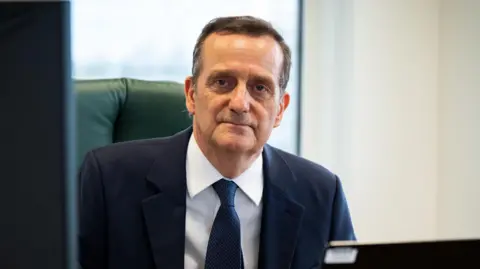
The chief prosecutor is under mounting calls to in greater depth clarify the collapse of a trial against a pair of defendants alleged of spying for Beijing.
MPs are demanding that Stephen Parkinson provide a "fuller rationale" of why charges against parliamentary researcher the first defendant, aged 30, and academic the second defendant, thirty-three, were dropped last month. The two individuals reject the allegations.
He has attributed the collapse of the prosecution on a inability by the government to provide sufficient documentation demonstrating that Beijing was a danger to the Britain's national security.
But requests for clarification have grown after the government published witness statements on midweek detailing the danger posed by Beijing.
Congressional Committees Set Time Limit
The heads of multiple congressional groups have imposed on Mr Parkinson, the director of the prosecution service, until the coming Friday to respond to a range of inquiries about why the trial collapsed.
He is also expected to be hauled before lawmakers to give evidence, with a joint security panel of MPs and peers also initiating a official investigation.
Labour MP the committee chair, who leads the panel, said there were "numerous concerns yet to be addressed" by both the DPP and the administration.
The MP stated that the committee would seek to hear from "administrative bodies and officials" as promptly.
An additional parliamentary group, the security panel, has initiated a independent investigation into how sensitive information was utilized during the proceeding.
Witness Accounts
Christopher Cash and Mr Berry were indicted last year under the historic secrecy law, charged of collecting and supplying information prejudicial to the security and affairs of the state between the end of 2021 and February 2023.
This law requires the prosecution to establish that defendants have transferred documents that could be "directly or indirectly beneficial to an enemy".
In a communication to lawmakers the previous week, Mr Parkinson said a legal finding in a different case following the indictments meant this encompassed countries deemed to present a "risk to the national security of the UK" at the time of the claimed crimes.
He stated that legal counsel had withdrawn the trial after not succeeding to acquire sufficient evidence from the government defining the Chinese state to that standard.
It led to a row with ministers, with the Prime Minister saying he was "extremely disappointed" the prosecutions did not go ahead and adopting the atypical step of disclosing official affidavits provided to the prosecution service.
The three statements, written by deputy national security adviser the official, are clear that the Beijing are carrying out espionage activities against the Britain.
In the documents, he said China was carrying out "widespread espionage" against the United Kingdom and was "the biggest government-sponsored danger to the UK's commercial safety".
Questioning of the Prime Minister
Stephen Parkinson met prominent parliamentarians on Wednesday, and is understood to have told them the government's documentation came "5% short" of what would have been necessary to be likely of securing a successful prosecution.
But several parliamentarians have remained to challenge why the prosecution service did not consider it had sufficient documentation to continue the case.
It has placed the DPP, who was appointed top prosecutor in recently under the previous Conservative government, into the center of an abnormally visible dispute with government officials.
The situation is especially unusual because Mr Parkinson is in his own right a successor to the Prime Minister, with the PM having directed the legal authorities between 2013 and the late 2010s, before he initially joined Parliament afterward.
A previous top lawyer at legal practice the firm, Parkinson at first prepared as a litigator before moving to become a lawyer in 2005.
Earlier than his selection as DPP, he had been questioning of Sir Keir's own time in the capacity, describing the national leader as "an average director" in a recent discussion with The Times.
He was quoted as stating the Labour leader "had been excessively trusting on guidance offered by others; he had no in-depth experience of legal prosecution… he was a defense and civil liberties attorney".
During a discussion in recently, Stephen Parkinson described how he had at first failed to apply to college due to poor expected results, before electing to reconsider after his actual results emerged to be stronger than anticipated.
He took a year out to apply to train as a lawyer, during which he was employed as a garbage collector, on a Israeli settlement and as a ballpoint pen vendor in that country.


